
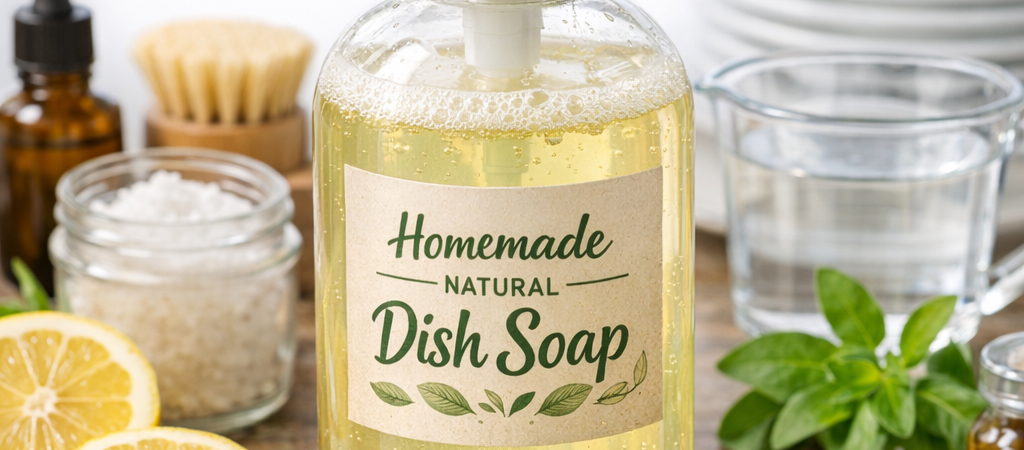
The “Green” Revolution in Your Kitchen: Why I Switched to DIY Professional Dish Soap
We’ve been conditioned to believe that for a dish soap to be “strong,” it needs to be a neon-colored liquid packed with synthetic chemicals. But if you look closely at the back of a commercial bottle, you’ll find a cocktail of sulfates, synthetic fragrances, and harsh preservatives that are as hard on your skin as they are on the environment.
By switching to a professional-grade DIY formula, you aren’t just making a “natural” soap—you’re making a better soap. Here is how to create a 1-liter batch of high-performance dish soap that rivals any industrial brand.
The Recipe (1 Liter Batch)
To get the best results, I recommend measuring these by weight (grams/oz) using a kitchen scale:
- Distilled Water (622g/22oz): The pure base that prevents bacterial growth from the start.
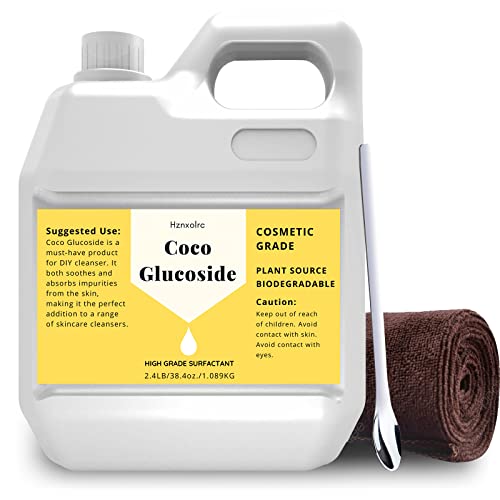
- Coco (Decyl) Glucoside (200g/7oz): Your heavy-duty grease cutter derived from coconut and fruit sugars.
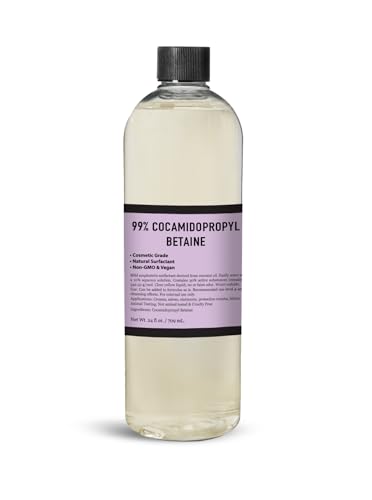
- Cocamidopropyl Betaine (120g/4.2oz): A mild surfactant that creates those satisfying, long-lasting bubbles.
- Vegetable Glycerin (20g/0.7oz): To keep your hands soft and prevent the skin from drying out.
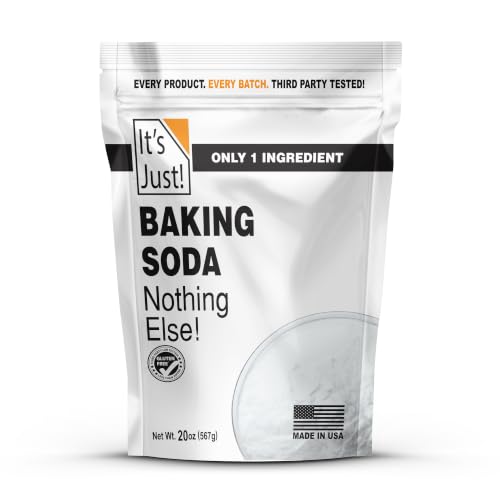
- Citric Acid (4.5g/0.16oz) and Sodium Bicarbonate (Baking soda) (6g/0.21oz): These react together to create Sodium Citrate, a natural water softener.
- Geogard 221 (8g/0.28 oz) (or Germaben): An eco-certified preservative to keep your batch fresh for months.
- Table Salt (approx. 18g/0.63oz): Your natural thickening agent.
- Extra Citric Acid (a pinch): To balance the final pH for skin safety.
- Bergamot essential oil: because we love some fresh, but safe fragrances, don’t we?



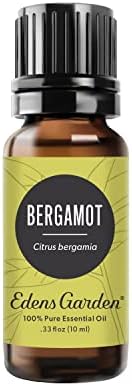
MANY of these ingredients are also used in other recipes, spanning from laundy softeners to beauty masks. Browse this website to find more! you will see how much you can do with so little and how much you can save in money and plastic by buying these ingredients and make your own products! DIY revolution, fellas!!
Step-by-Step Preparation
SAFETY FIRST: Always protect your hands and eyes with gloves and protective glasses, when handling chemicals.
- Create the Water Softener: Add the 4.5g/0.16oz of Citric Acid and 6g/0.21oz of Sodium Bicarbonate to your distilled water. It will fizz—this is the chemical reaction creating your chelating agent. Wait until the bubbling stops completely and the water is clear.
- Add the Cleaners: Gently stir in the Coco-Glucoside and Cocamidopropyl Betaine. Tip: Warm the water slightly to help the thick Coco-Glucoside blend in more easily, but don’t let it boil.
- Condition & Preserve: Stir in the Vegetable Glycerin and the Geogard 221 preservative.
- Balance the pH: Add a small amount of extra Citric Acid. You want the liquid to be slightly acidic (around pH 5.5), which is the “sweet spot” for the preservative to work and for your hands to stay healthy. After pH adjustment, add your 10 drops of essential oil. I suggest bergamot 🙂
- The Magic Finish: Slowly add your salt, one teaspoon at a time, while stirring. Watch as the liquid transforms from watery to a thick, professional gel. Stop when you reach your desired consistency!
Why This Beats Commercial Brands
1. Massive Financial Savings While buying the raw ingredients requires an initial investment, the cost per liter is significantly lower than premium “eco” brands. A single gallon of Coco-Glucoside can make dozens of bottles of soap. You are no longer paying for the fancy plastic bottle, the marketing budget, or the shipping of heavy water—you’re just paying for the active cleaning power. Plus, you’re buying core ingredients to make many other useful products, from laundry to body care and house cleaning!
2. Health and Skin Safety Commercial soaps often use SLS (Sodium Lauryl Sulfate), which is a known skin irritant that strips the natural oils from your hands. This formula uses APGs (Alkyl Polyglucosides), which are incredibly gentle. If you suffer from dry, cracked hands after doing dishes, this switch is a game-changer.
3. Environmental Integrity Most “industrial” soaps contain phosphates and synthetic chelators that are toxic to aquatic life. Our formula uses Sodium Citrate and sugar-based surfactants that are 100% biodegradable. You can wash your dishes knowing that what goes down the drain isn’t harming the local ecosystem.
4. Total Control When you make it yourself, you know exactly what is in it. No “hidden” fragrances or proprietary chemicals. You can even add a few drops of your favorite organic essential oils (like Lemon or Eucalyptus) to get that fresh scent without the synthetic hormone-disruptors found in store-bought perfumes.
The Verdict
Buying these ingredients might feel like a leap, but it’s an investment in your home’s health and your wallet’s future. Once you see how this “green” chemistry cuts through a greasy frying pan, you’ll never go back to the neon blue stuff again.